Ramp
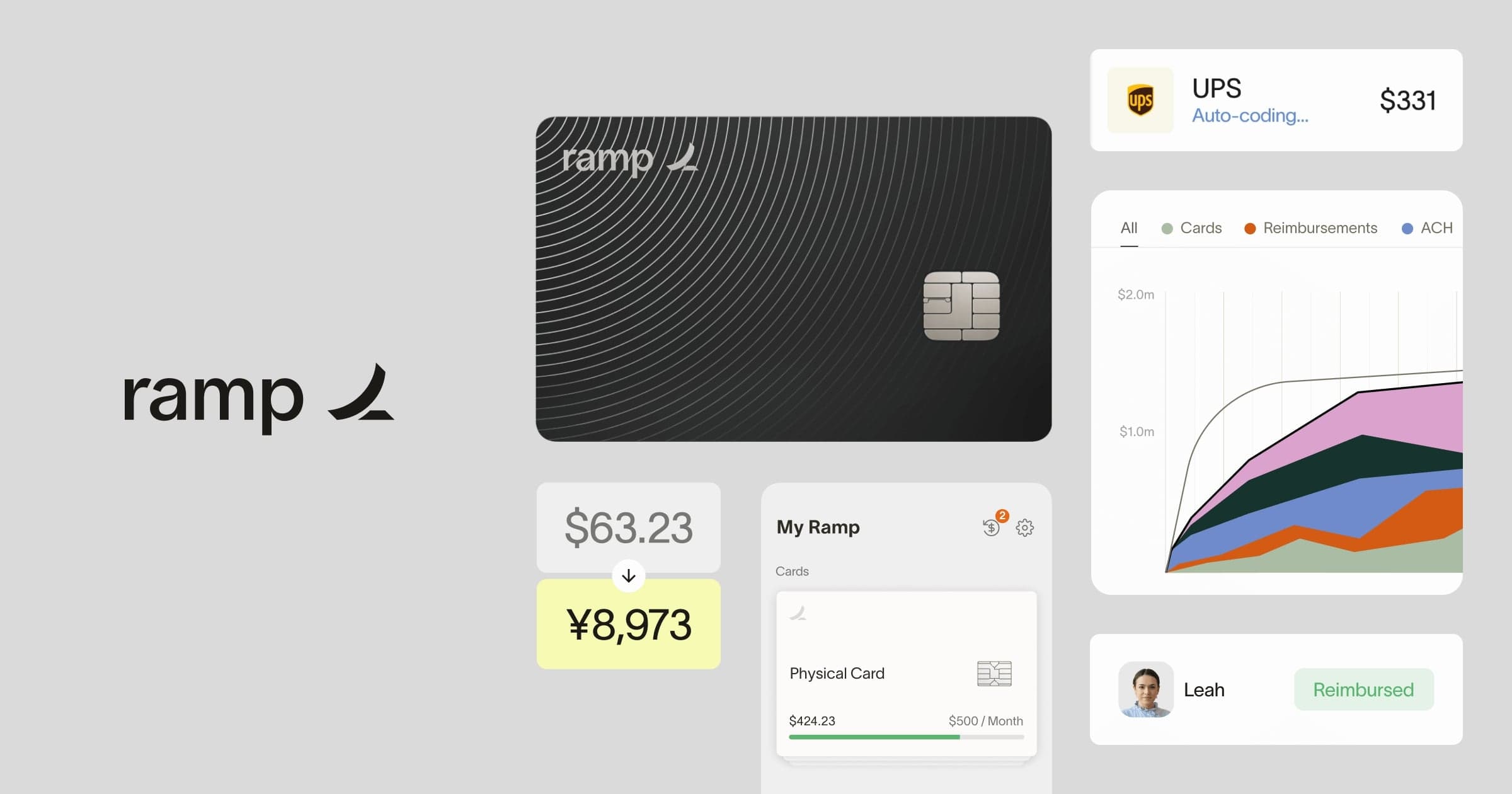
Visa corporate charge card: $0 annual fee, no interest, up to 1.5% cash back, no personal guarantee or personal credit check. Best for U.S. companies with $25,000+ cash.
Rates & Cost
What the financing costs, normalized so lenders can be compared.
Repayment Terms
How and how fast you pay it back, and how flexible it is.
Eligibility & Access
Who qualifies and what you have to put on the line.
Speed & Service
How fast you get funded and how the lender treats you.
Company Verification
Who actually stands behind the lender: legal entity, registration, and how long the business and its website have existed. Checked against public registries.
Best for: U.S. corporations, LLCs and nonprofits holding $25,000 or more in a business bank account that want free employee cards, spend controls and cash back with no personal guarantee or personal credit check.
Not for: Sole proprietors, businesses that need to carry a balance, or anyone chasing bonus-category rewards. Ramp is a pay-in-full charge card: a spending tool, not financing.
Lender List verdict: Ramp is one of the strongest no-fee corporate cards for a cash-backed company: the Free plan costs $0 and pays up to 1.5% back. The trade-offs are the $25,000 cash floor, a cashback rate Ramp sets per customer, and weak public complaint handling (BBB F).
Ramp at a glance
Ramp is a Visa corporate charge card with $0 annual fee, up to 1.5% cash back and no personal guarantee.
| Ramp | |
|---|---|
| Lender type | Corporate charge card; issued by Celtic, Sutton and Lead Bank |
| Founded | 2019 (launched February 2020) |
| HQ | New York, NY |
| Parent/owner | Ramp Business Corporation (venture-backed, valued around $60 billion in October 2026) |
| Products | Corporate card, expenses, bill pay, Ramp Checking |
| Amounts | Limit set from cash balance or revenue; no published maximum |
| Cost (headline) | $0 annual fee and no interest; Plus plan $15 per user per month |
| Term | Pay in full: 1-day or 30-day terms |
| Funding speed | Not published; a linked bank account speeds underwriting |
| Status | Active (2026-10-26) |
What is Ramp?
Ramp is a New York finance-software company, founded in March 2019, that pairs a corporate charge card with expense and bill-pay tools. It launched in February 2020 and reports more than 70,000 customers. Its Visa cards are issued by three FDIC-member banks: Celtic Bank, Sutton Bank and Lead Bank.
How the Ramp corporate card works
The Ramp corporate card is a charge card: the company, not the founder, is liable, and every statement must be paid in full with no interest charged. Ramp assigns each business a single payment setup.
- 1-day terms: Ramp pulls payment from your Ramp Checking account every day; your limit is usually the cash sitting there.
- 30-day terms: a monthly statement, paid in full by its due date, by autopay or wire.
- Credit building: payments on 1-day terms are reported to business credit bureaus.
- Ramp Flex: vendor bills can be stretched over 30 to 90 days for a fee (Merchant Maverick); the card itself cannot revolve.
Ramp card fees and rewards: what it really costs
The Ramp card has no annual fee and no interest; the main costs are optional software (Plus at $15 per user per month plus an unpublished platform fee) and a currency markup of up to 3% abroad.
- Free plan: $0, including unlimited cards, controls and basic accounting sync
- Plus: $15 per user per month plus the platform fee; 20% off billed annually; 30-day trial
- Foreign spend: no separate foreign transaction fee, but Ramp's exchange rate can include a margin of up to 3%
- Rewards: up to 1.5% cash back (NerdWallet, Merchant Maverick); the rate varies by customer and never expires
Worked example: a team spending $20,000 a month ($240,000 a year) on the Free plan earns $3,600 a year at 1.5%, or $2,400 if Ramp sets its rate at 1.0%. Move 10 users to Plus and software costs $1,800 a year ($1,440 billed annually) before the platform fee, cutting the net benefit at 1.5% to $1,800 or less. The same spend on the Amex Blue Business Cash card earns $2,900 (2% on the first $50,000, then 1%).
Ramp card requirements
Ramp requires at least $25,000 in cash in a linked U.S. business bank account, and a U.S.-registered entity with an EIN.
| Requirement | Ramp minimum |
|---|---|
| Personal credit score | None published; no personal credit check (NerdWallet) |
| Time in business | No minimum (NerdWallet) |
| Annual revenue | No minimum; $25,000 cash balance instead |
| Entity | Corporation, LLC, LP or nonprofit; no sole proprietors |
| Bank account / address | Linked U.S. business account; physical U.S. address (no PO box or virtual office) |
| Collateral / guarantee | Unsecured; no personal guarantee |
Ramp sizes the limit as a share of your linked cash or, if you opt in, from revenue rather than from personal credit.
Pros and cons
Ramp's biggest strengths are a $0 card with free unlimited employee cards and no personal liability; its biggest weakness is that you cannot carry a balance.
Pros
- $0 Free plan includes the card, controls and accounting sync
- Up to 1.5% back on all spend, with no expiry
- Unlimited free virtual and physical cards with per-card limits
- No personal credit check to apply
- 1-day terms build business credit
Cons
- $25,000 cash minimum shuts out many small firms
- Not open to sole proprietors
- Up to 3% FX markup despite "no foreign transaction fee"
- BBB F rating (not accredited) and a 2.3/5 Trustpilot score
Ramp vs. Brex vs. Amex Blue Business Cash
Ramp and Brex (owned by Capital One since April 2026) are both no-guarantee corporate cards; Amex Blue Business Cash is a traditional credit card that can carry a balance.
| Ramp | Brex | Amex Blue Business Cash | |
|---|---|---|---|
| Card type | Charge, pay in full | Charge, pay in full | Credit, can revolve |
| Software / annual fee | $0 Free; $15 per user per month Plus | $0 Essentials; $12 per user per month Premium | $0 annual fee |
| Rewards | Up to 1.5% cash back | 1x to 7x points by category | 2% on first $50,000 per year, then 1% |
| Interest | None | None | 0% intro for 12 months, then 16.99% to 28.74% |
| Credit check | No personal check | No personal bureau check | Recommended 690 to 850 FICO |
| Cash / revenue bar | $25,000 cash | $50,000 cash (funded startups) or $500,000+ revenue | None published |
| Foreign spend | Up to 3% FX markup | Up to 3% FX markup | 2.7% |
Brex figures from Brex's site; Amex APR, FX fee and credit range from NerdWallet (October 14, 2026).
Choose Ramp for flat cash back and free software. Choose Brex if you are venture-funded and spend heavily on travel and software. Choose Amex Blue Business Cash if you have good personal credit or need to carry a balance.
Ramp alternatives on Lender List
If you need to borrow rather than just spend, a line of credit fits better than Ramp's pay-in-full card.
- Bluevine: a revolving business line of credit you repay over months
- Fundbox: a line of credit with lower revenue and credit bars
- Browse all business credit and charge cards on Lender List
Frequently asked questions about Ramp
Ramp is a legitimate, venture-backed charge card company, but it is not a revolving credit card.
Is the Ramp Credit Card Legit? Yes. Ramp has operated since 2019, issues cards through FDIC-member banks, holds NMLS licenses, serves 70,000+ customers and raised money at about a $60 billion valuation in October 2026. Its public reviews are weak, though: BBB rates it F (not accredited, 5 complaints) and Trustpilot shows 2.3/5 from 214 reviews.
Is Ramp a Credit Card? Not in the usual sense. Ramp is a corporate charge card on the Visa network: it extends a spending limit, but the balance must be paid in full every statement period, so there is no interest and no way to carry debt.
How Much Does the Ramp Card Cost? The Ramp card itself costs $0, with no annual fee and no interest. The Free plan covers unlimited cards and basic integrations. Ramp Plus costs $15 per user per month plus a platform fee tied to team size, and Enterprise is custom-priced.
Does the Ramp Card Have a Foreign Transaction Fee? Ramp advertises no foreign transaction fee, but its help center says the exchange rate on non-USD purchases includes a margin capped at 3%. In practice, foreign spend can cost up to 3% more, which NerdWallet also flags. Brex applies a similar markup of up to 3%.
Can I Use My Own Credit Card With Ramp? Yes, for reimbursements. On Ramp Plus, an employee can link one personal credit card and turn its transactions into reimbursement requests, as long as the company has reimbursements enabled. The feature is not on the Free plan, and only one personal card can be linked at a time.
What Bank Issues the Ramp Credit Card? Three FDIC-member banks issue Ramp cards: Celtic Bank (Ramp Visa Corporate Card), Sutton Bank (Ramp Visa Commercial Card) and Lead Bank (Ramp Visa Business Card). All run on the Visa network. Ramp Business Corporation, based in New York, runs the program and the software.
Is the Ramp Corporate Card Worth It? Yes, if your company keeps $25,000 or more in cash and pays its card in full. At $20,000 a month in spend, the Free plan returns up to $3,600 a year with no fees. It is a poor fit if you need to carry a balance or are a sole proprietor.
Last verified 2026-10-26. Pricing and terms are provider-stated or third-party-reported and vary by offer; confirm with the lender before applying.
Best for: U.S. corporations, LLCs and nonprofits holding $25,000 or more in a business bank account that want free employee cards, spend controls and cash back with no personal guarantee or personal credit check.
Not for: Sole proprietors, businesses that need to carry a balance, or anyone chasing bonus-category rewards. Ramp is a pay-in-full charge card: a spending tool, not financing.
Lender List verdict: Ramp is one of the strongest no-fee corporate cards for a cash-backed company: the Free plan costs $0 and pays up to 1.5% back. The trade-offs are the $25,000 cash floor, a cashback rate Ramp sets per customer, and weak public complaint handling (BBB F).
Ramp at a glance
Ramp is a Visa corporate charge card with $0 annual fee, up to 1.5% cash back and no personal guarantee.
| Ramp | |
|---|---|
| Lender type | Corporate charge card; issued by Celtic, Sutton and Lead Bank |
| Founded | 2019 (launched February 2020) |
| HQ | New York, NY |
| Parent/owner | Ramp Business Corporation (venture-backed, valued around $60 billion in October 2026) |
| Products | Corporate card, expenses, bill pay, Ramp Checking |
| Amounts | Limit set from cash balance or revenue; no published maximum |
| Cost (headline) | $0 annual fee and no interest; Plus plan $15 per user per month |
| Term | Pay in full: 1-day or 30-day terms |
| Funding speed | Not published; a linked bank account speeds underwriting |
| Status | Active (2026-10-26) |
What is Ramp?
Ramp is a New York finance-software company, founded in March 2019, that pairs a corporate charge card with expense and bill-pay tools. It launched in February 2020 and reports more than 70,000 customers. Its Visa cards are issued by three FDIC-member banks: Celtic Bank, Sutton Bank and Lead Bank.
How the Ramp corporate card works
The Ramp corporate card is a charge card: the company, not the founder, is liable, and every statement must be paid in full with no interest charged. Ramp assigns each business a single payment setup.
- 1-day terms: Ramp pulls payment from your Ramp Checking account every day; your limit is usually the cash sitting there.
- 30-day terms: a monthly statement, paid in full by its due date, by autopay or wire.
- Credit building: payments on 1-day terms are reported to business credit bureaus.
- Ramp Flex: vendor bills can be stretched over 30 to 90 days for a fee (Merchant Maverick); the card itself cannot revolve.
Ramp card fees and rewards: what it really costs
The Ramp card has no annual fee and no interest; the main costs are optional software (Plus at $15 per user per month plus an unpublished platform fee) and a currency markup of up to 3% abroad.
- Free plan: $0, including unlimited cards, controls and basic accounting sync
- Plus: $15 per user per month plus the platform fee; 20% off billed annually; 30-day trial
- Foreign spend: no separate foreign transaction fee, but Ramp's exchange rate can include a margin of up to 3%
- Rewards: up to 1.5% cash back (NerdWallet, Merchant Maverick); the rate varies by customer and never expires
Worked example: a team spending $20,000 a month ($240,000 a year) on the Free plan earns $3,600 a year at 1.5%, or $2,400 if Ramp sets its rate at 1.0%. Move 10 users to Plus and software costs $1,800 a year ($1,440 billed annually) before the platform fee, cutting the net benefit at 1.5% to $1,800 or less. The same spend on the Amex Blue Business Cash card earns $2,900 (2% on the first $50,000, then 1%).
Ramp card requirements
Ramp requires at least $25,000 in cash in a linked U.S. business bank account, and a U.S.-registered entity with an EIN.
| Requirement | Ramp minimum |
|---|---|
| Personal credit score | None published; no personal credit check (NerdWallet) |
| Time in business | No minimum (NerdWallet) |
| Annual revenue | No minimum; $25,000 cash balance instead |
| Entity | Corporation, LLC, LP or nonprofit; no sole proprietors |
| Bank account / address | Linked U.S. business account; physical U.S. address (no PO box or virtual office) |
| Collateral / guarantee | Unsecured; no personal guarantee |
Ramp sizes the limit as a share of your linked cash or, if you opt in, from revenue rather than from personal credit.
Pros and cons
Ramp's biggest strengths are a $0 card with free unlimited employee cards and no personal liability; its biggest weakness is that you cannot carry a balance.
Pros
- $0 Free plan includes the card, controls and accounting sync
- Up to 1.5% back on all spend, with no expiry
- Unlimited free virtual and physical cards with per-card limits
- No personal credit check to apply
- 1-day terms build business credit
Cons
- $25,000 cash minimum shuts out many small firms
- Not open to sole proprietors
- Up to 3% FX markup despite "no foreign transaction fee"
- BBB F rating (not accredited) and a 2.3/5 Trustpilot score
Ramp vs. Brex vs. Amex Blue Business Cash
Ramp and Brex (owned by Capital One since April 2026) are both no-guarantee corporate cards; Amex Blue Business Cash is a traditional credit card that can carry a balance.
| Ramp | Brex | Amex Blue Business Cash | |
|---|---|---|---|
| Card type | Charge, pay in full | Charge, pay in full | Credit, can revolve |
| Software / annual fee | $0 Free; $15 per user per month Plus | $0 Essentials; $12 per user per month Premium | $0 annual fee |
| Rewards | Up to 1.5% cash back | 1x to 7x points by category | 2% on first $50,000 per year, then 1% |
| Interest | None | None | 0% intro for 12 months, then 16.99% to 28.74% |
| Credit check | No personal check | No personal bureau check | Recommended 690 to 850 FICO |
| Cash / revenue bar | $25,000 cash | $50,000 cash (funded startups) or $500,000+ revenue | None published |
| Foreign spend | Up to 3% FX markup | Up to 3% FX markup | 2.7% |
Brex figures from Brex's site; Amex APR, FX fee and credit range from NerdWallet (October 14, 2026).
Choose Ramp for flat cash back and free software. Choose Brex if you are venture-funded and spend heavily on travel and software. Choose Amex Blue Business Cash if you have good personal credit or need to carry a balance.
Ramp alternatives on Lender List
If you need to borrow rather than just spend, a line of credit fits better than Ramp's pay-in-full card.
- Bluevine: a revolving business line of credit you repay over months
- Fundbox: a line of credit with lower revenue and credit bars
- Browse all business credit and charge cards on Lender List
Frequently asked questions about Ramp
Ramp is a legitimate, venture-backed charge card company, but it is not a revolving credit card.
Is the Ramp Credit Card Legit? Yes. Ramp has operated since 2019, issues cards through FDIC-member banks, holds NMLS licenses, serves 70,000+ customers and raised money at about a $60 billion valuation in October 2026. Its public reviews are weak, though: BBB rates it F (not accredited, 5 complaints) and Trustpilot shows 2.3/5 from 214 reviews.
Is Ramp a Credit Card? Not in the usual sense. Ramp is a corporate charge card on the Visa network: it extends a spending limit, but the balance must be paid in full every statement period, so there is no interest and no way to carry debt.
How Much Does the Ramp Card Cost? The Ramp card itself costs $0, with no annual fee and no interest. The Free plan covers unlimited cards and basic integrations. Ramp Plus costs $15 per user per month plus a platform fee tied to team size, and Enterprise is custom-priced.
Does the Ramp Card Have a Foreign Transaction Fee? Ramp advertises no foreign transaction fee, but its help center says the exchange rate on non-USD purchases includes a margin capped at 3%. In practice, foreign spend can cost up to 3% more, which NerdWallet also flags. Brex applies a similar markup of up to 3%.
Can I Use My Own Credit Card With Ramp? Yes, for reimbursements. On Ramp Plus, an employee can link one personal credit card and turn its transactions into reimbursement requests, as long as the company has reimbursements enabled. The feature is not on the Free plan, and only one personal card can be linked at a time.
What Bank Issues the Ramp Credit Card? Three FDIC-member banks issue Ramp cards: Celtic Bank (Ramp Visa Corporate Card), Sutton Bank (Ramp Visa Commercial Card) and Lead Bank (Ramp Visa Business Card). All run on the Visa network. Ramp Business Corporation, based in New York, runs the program and the software.
Is the Ramp Corporate Card Worth It? Yes, if your company keeps $25,000 or more in cash and pays its card in full. At $20,000 a month in spend, the Free plan returns up to $3,600 a year with no fees. It is a poor fit if you need to carry a balance or are a sole proprietor.
Last verified 2026-10-26. Pricing and terms are provider-stated or third-party-reported and vary by offer; confirm with the lender before applying.
Related listings
Corporate charge card with no personal guarantee or personal credit check; limits from business cash and revenue, $0 Ess...
Short-term business loans up to $10M over 3 to 24 months. Pricing not published. 625 credit, $750K revenue, 6 months in ...
Recurring-revenue financing, $25,000 to $10M. Revenue financing from a 7% discount (~13.6% to 16.0% APR), no warrants or...
Free loan marketplace, not a lender: 25+ partners, $5,000 to $5,000,000, 11.25% to ~41% APR. Soft pull to view offers. B...
Amex business charge and credit cards, $0 to $895 annual fee, up to 2% cash back; 16.99% to 28.74% APR if you carry a ba...
SaaS revenue-based and term loans up to $4M a round ($10M total). 1.3x to 1.5x cap (~18% to 29% APR), no personal guaran...